

 Nov 19, 2026
 3 min read
Ask ten casino players what RTP means and you'll get ten confident answers, most of them wrong. "It's the percentage I get back," one will say. "So a 96% s
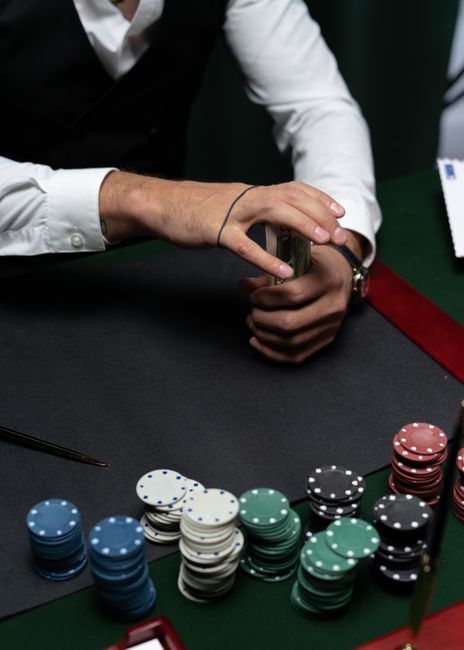
Ask ten casino players what RTP means and you'll get ten confident answers, most of them wrong. "It's the percentage I get back," one will say. "So a 96% slot pays me $96 for every $100 I put in." That's not how it works. Not even close. And misunderstanding this single concept costs players more money than any rigged game ever could.
Let's fix that.
Return to Player is a theoretical figure calculated over millions of spins, not a promise for your session. A 96% RTP slot means that across an enormous sample size — we're talking billions of spins, sometimes simulated — the machine returns 96 cents for every dollar wagered. The remaining 4% is the house edge.
Here's the part people miss: you will never experience 96% in a single sitting. You'll experience wild swings — 200% on a lucky night, 40% on a brutal one. The RTP only reveals itself in the aggregate. Think of it like life insurance. The company knows what percentage of premiums it pays out over a million policies. That tells you nothing about whether you will file a claim.
A few concrete numbers worth remembering:
See the pattern? The games where your decisions matter — blackjack, poker, video poker — sit at the top. The games where you just press a button sit lower. That's not coincidence. Skill reduces the house's edge.
RTP tells you the average. Volatility tells you the ride.
A high-volatility slot like Money Train 3 might have the same 96% RTP as a low-volatility classic like Starburst, but your experience will be completely different. High volatility means long dry spells punctuated by rare massive wins. Low volatility means frequent small wins that keep your balance ticking along.
Which one is better? Depends on your bankroll and your temperament. If you have $50 and want two hours of entertainment, low volatility is your friend. If you have $500 and you're chasing a five-figure payout, high volatility gives you a shot — just accept that most sessions will end with nothing.
This is where most players go wrong. They pick a slot because the graphics look cool, dump in their whole bankroll, and wonder why it ate them alive. The machine wasn't broken. They just didn't match their style to their tolerance.
Poker sits in a different universe. There's no house edge baked into the rules — the casino takes a rake, usually 5% of each pot capped at a few dollars, and everything else is player versus player. That means your long-term result depends almost entirely on skill.
Here's a rough hierarchy of where money flows at a typical cash table:
If you sit down without understanding position, pot odds, or range construction, you're not gambling against the house. You're gambling against someone who knows exactly what you're doing. That's a worse proposition than any slot machine. It is also worth checking สล็อต before deciding.
But here's the upside: no other casino game lets you beat it consistently with study and discipline. You can't out-skill a roulette wheel. You can out-skill the guy in seat four.
The single biggest difference between players who last and players who burn out is bankroll discipline. Not luck. Not hot streaks. Discipline.
A workable framework:
The stop-loss protects you from tilt. The win goal protects you from the classic error of giving it all back. Both require you to actually follow the rules you set. That's the hard part. Setting them is easy.
Welcome bonuses look great. "100% up to $500!" But the wagering requirement attached to that bonus is where the real math lives.
Suppose you accept a $500 bonus with a 40x wagering requirement. That means you need to wager $20,000 before you can withdraw a cent of bonus money. At 96% RTP on slots, the expected loss from that $20,000 in wagering is $800. Your $500 bonus is worth less than the cost of clearing it.
Now a 25x requirement with a $500 bonus? Only $12,500 in wagering, expected loss around $500. You're roughly break-even. Still not free money, but closer to viable.
Always check these three things before accepting any bonus:
None of this is about sucking the fun out of gambling. It's about playing with your eyes open. The players who enjoy this hobby longest aren't the ones who hit the biggest jackpot. They're the ones who understood what they were buying, spent only what they planned to lose, and treated the whole thing as entertainment with a cost — like a concert ticket.
RTP, volatility, rake, wagering requirements — these aren't secret knowledge reserved for pros. They're right there in the terms and conditions most people never read. Spend fifteen minutes learning them and you'll make better decisions than 90% of the people sitting next to you, whether online or in a Vegas sportsbook.
The house always has an edge. That's the business model. But you get to choose which edge you hand over. Some are 0.5%. Some are 15%. That gap is entirely on you.
Provide clear contact information, including phone number, email, and address.

This post covers tips on color schemes, fonts, and visuals to keep your profile visually appealing and cohesive.
 Sep 21, 2026

Gen Z is reshaping digital interaction. Learn what matters to this generation and how to create authentic, meaningful content.
Sep 15, 2026

Gen Z is reshaping digital interaction. Learn what matters to this generation and how to create authentic, meaningful content.
Sep 13, 2026
Unlock the tools and insights you need to thrive on social media with Harbor Dale. Join our community for expert tips, trending strategies, and resources that empower you to stand out and succeed.

Harbor Dale is your hub for the latest in digital innovation, technology trends, creative insights. Our mission is to empower creators, businesses, valuable resource.
© 2026 Tide and Trail. All rights reserved.


Tags
Matthew Kuhnemann
8/2/2024
“I love how this breaks down the importance of consistency and authenticity. It's easy to get caught up in trends, but staying true to yourself really is key. Great read!"